Can I Stay in My Home During Water Damage Restoration? | Flooded Brooklyn
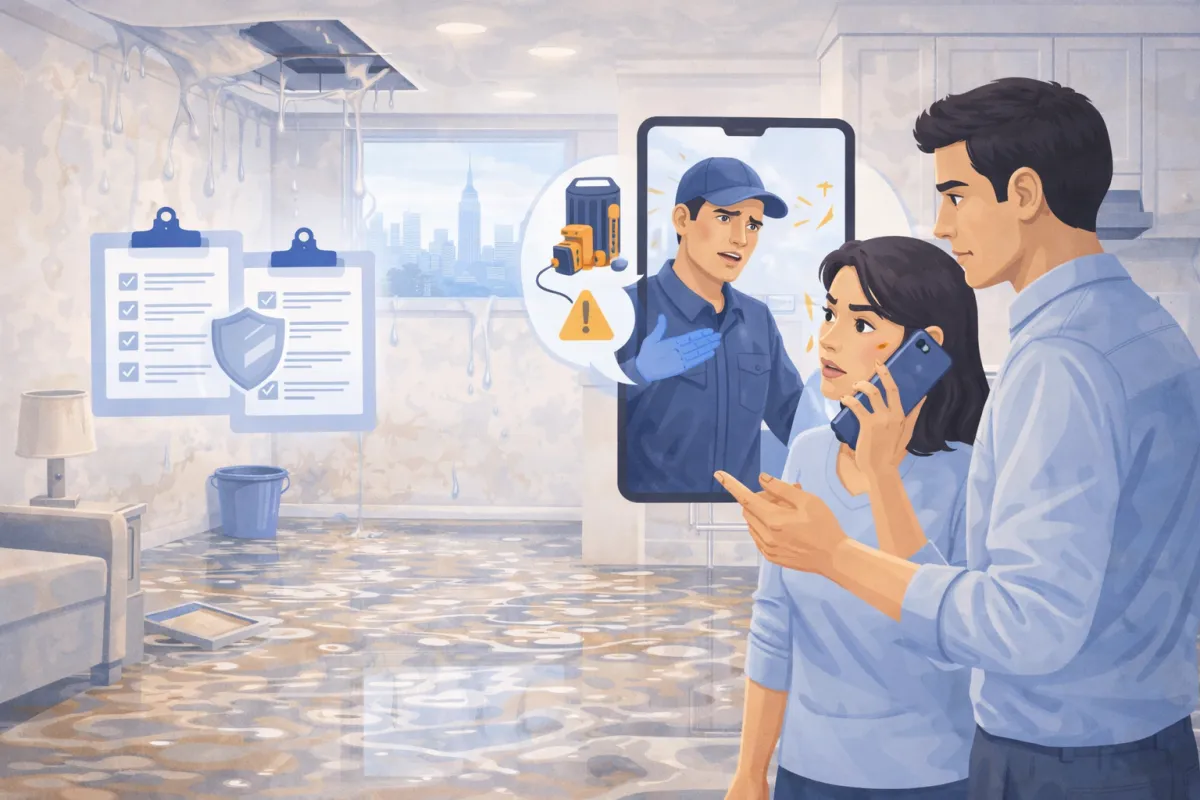
When a pipe bursts or a heavy New York storm leads to a flooded basement, the immediate aftermath is chaotic. Once the water is stopped, the next question is usually: "Do I need to check into a hotel, or can we sleep here tonight?"
The answer isn't always a simple yes or no. It depends on the source of the water, the extent of the damage, and the health of the people living in the home.
Understanding the "Category" of Water
Professional restoration experts categorize water based on its level of contamination. This is the most critical factor in determining if it is safe for you to remain on-site.
Category 1 (Clean Water): This comes from a clean source, like a broken supply line or a malfunctioning faucet. If the damage is localized to one room, staying in the home is usually safe.
Category 2 (Gray Water): This water has a significant degree of chemical or biological contamination, such as discharge from a dishwasher or washing machine. Limited exposure is generally okay, but the area must be strictly avoided.
Category 3 (Black Water): This is grossly contaminated water, including sewage backups or rising floodwater from the street. According to industry safety guidelines, Category 3 water contains harmful pathogens and bacteria. In these cases, we strongly recommend that residents vacate the property until the professional disinfection phase is complete.
The Reality of the Drying Environment
Even if the water is "clean," the restoration process itself can make a home difficult to live in. To prevent mold and structural rot, professionals use industrial-grade equipment that stays on 24/7.
Noise and Heat
High-velocity air movers and LGR (Low Grain Refrigerant) dehumidifiers are loud. Living with several of these machines running at once can feel like living on a tarmac. Additionally, these machines pull moisture out of the air by generating heat, which can make the affected rooms uncomfortably warm.
Containment Zones
In many Brooklyn apartments and brownstones, space is tight. We often set up "containment zones" using heavy-duty plastic sheeting. While this keeps dust and moisture from spreading to the rest of your home, it can block hallways or limit access to kitchens and bathrooms. If the only bathroom in your unit is inside the containment zone, the home is effectively uninhabitable.
Health Risks and Vulnerable Residents
Health is the ultimate deciding factor. Even with professional air scrubbers and HEPA filtration, the restoration process can stir up allergens or old dust hidden behind walls.
Professional health guidelines indicate that certain groups should almost always relocate during the drying process:
Infants and young children with developing respiratory systems.
Seniors or individuals with weakened immune systems.
Anyone with chronic respiratory conditions like asthma or COPD.
The presence of damp materials and high humidity can trigger respiratory distress even before visible mold appears.
Insurance and "Loss of Use"
Many Brooklyn homeowners and renters are unaware that their insurance policies may help with the cost of staying elsewhere. Most standard policies include a provision called "Loss of Use" or "Additional Living Expenses (ALE)."
If a certified restoration professional deems the home uninhabitable due to the loss of essential services (like water or electricity) or significant health risks, your insurance may cover hotel stays, restaurant meals, and even pet boarding. We recommend checking your specific policy or speaking with your adjuster as soon as the claim is filed.
When Professional Help is Recommended?
If the water has affected more than one room, involves a sewage backup, or has soaked into structural materials like subfloors and drywall, professional intervention is necessary to ensure the home is truly safe to live in again.
At Flooded Brooklyn, we prioritize your safety. We work to dry your property as quickly and quietly as possible, using moisture-mapping technology to ensure no hidden pockets of water are left behind to cause future mold growth.
