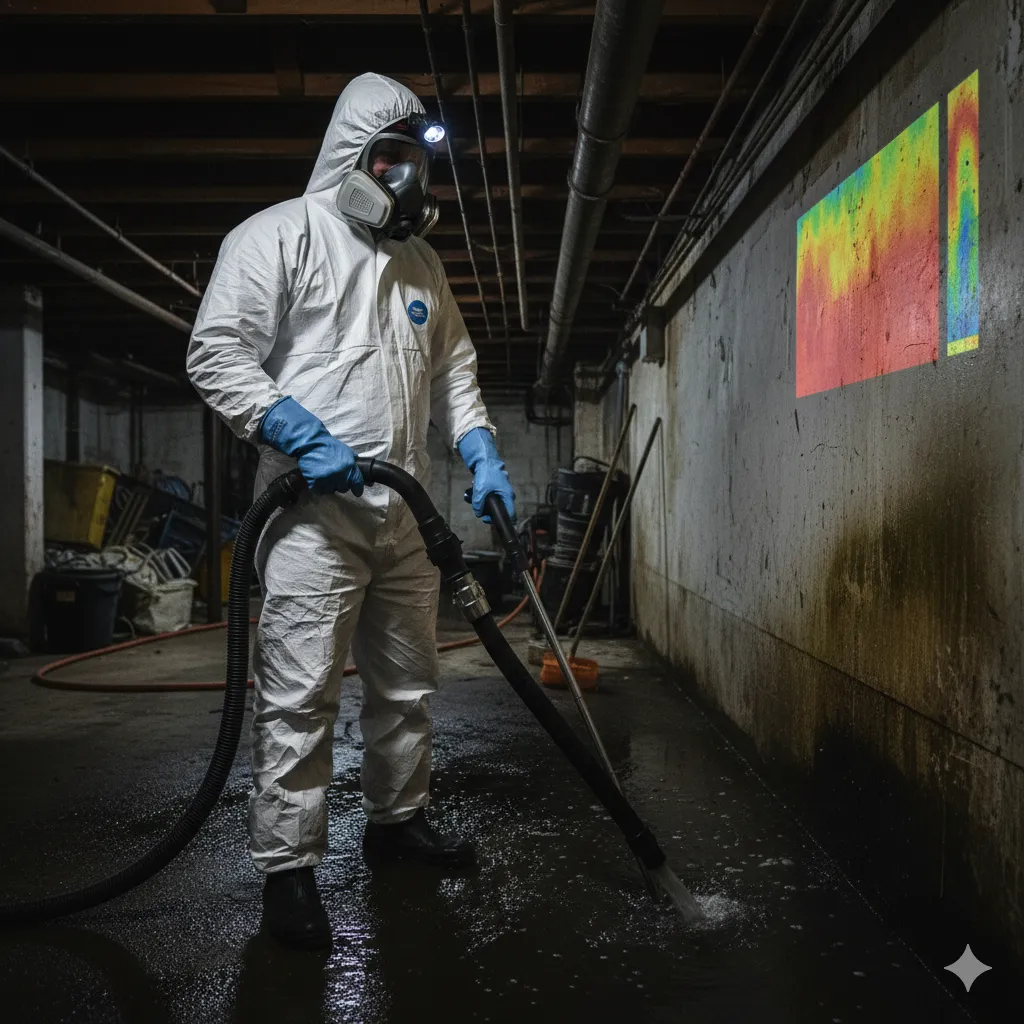
Sewage Cleanup Brooklyn: The Dangers of Category 3 Water & Biohazards
In my years serving as one of the go-to restoration experts in Brooklyn, NY, I’ve handled everything from minor sink overflows to massive high-rise pipe bursts. But there is one phone call that always changes my tone: the sewage backup.
In our industry, we don't just call this "dirty water." We call it Category 3 Water, or more commonly, "Black Water."
If you’re standing in your basement in Bushwick or a commercial space in Downtown Brooklyn, looking at a toilet overflow or a floor drain backing up, your first instinct might be to grab a mop and some bleach. Stop. At Flooded Brooklyn, we treat every sewage event as a high-priority biohazard removal project. Here is why this specific type of flooding is a threat to your health, your property, and why "DIY" is never an option.
What Exactly is Category 3 "Black Water"?
The IICRC (the governing body for restoration standards) classifies water into three categories. Category 1 is clean (a broken supply line); Category 2 is "gray" (dishwasher or shower water).
Category 3 (Black Water) is grossly contaminated. It contains:
Pathogens: Bacteria like E. coli and Salmonella.
Viruses: Hepatitis A, Norovirus, and Rotavirus.
Parasites: Cryptosporidium and Giardia.
Chemical Contaminants: Heavy metals and toxins from the NYC sewer system.
The danger isn't just in touching it. In the confined, humid spaces of a Brooklyn basement, these contaminants can become aerosolized. Simply breathing the air in a room with a sewage backup can lead to respiratory infections and severe gastrointestinal distress.
Why Professional Sanitization in Brooklyn is Non-Negotiable?
When we arrive for sewage cleanup in Brooklyn, we aren't just "cleaning." We are performing a medical-grade decontamination. Here is how the pros handle what a mop can't:
1. Specialized PPE (The Hazmat Approach)
You cannot fight a biohazard in sneakers and a t-shirt. Our teams wear full-body suits, nitrile gloves, and N95 or full-face respirators. This protects our crew from "splash" contamination and airborne pathogens.
2. The "Porous Material" Rule
Standard water can often be dried out of drywall or carpet. Sewage cannot. If Black Water touches a porous material, carpet, padding, insulation, or even unsealed hardwood, those materials are biologically compromised. At Flooded Brooklyn, we follow a strict "remove and replace" protocol for these items to ensure no bacteria are trapped behind your walls.
3. Industrial-Strength Biocides
Household bleach isn't strong enough to neutralize the complex cocktail of pathogens in raw sewage. We use EPA-registered, hospital-grade antimicrobial and sporicidal agents that kill bacteria on contact while remaining safe for your family once dry.

The Risk of DIY: Why You'll Pay More Later
I’ve seen "handyman" cleanups lead to devastating results. If you don't use the correct professional sanitization techniques in Brooklyn:
Cross-Contamination: You’ll track microscopic pathogens from the "hot zone" into your clean kitchen or living room.
Hidden Mold: Sewage provides a "nutrient-rich" environment. If even a small amount of moisture is left behind a baseboard, you will have a toxic mold colony within 48 hours.
Insurance Rejection: Most carriers require professional documentation to prove a biohazard was remediated to code.
FAQs
Q: Is sewage backup covered by insurance in Brooklyn?
A: Most standard policies require a specific "Sewer Backup Endorsement." If you have this, the cost of professional sanitization Brooklyn is typically covered. Our team at Flooded Brooklyn works directly with adjusters to document the biohazard and streamline your claim.
Q: Can I get sick just from the smell of sewage?
A: While the odor itself is caused by gases like hydrogen sulfide, the same conditions creating the smell are likely aerosolizing bacteria. If you can smell it, you are likely inhaling particles you shouldn't be.
Q: How long does sewage cleanup take?
A: A standard residential backup usually takes 3 to 5 days. This includes 24 hours for extraction and sanitization, followed by 48-72 hours of industrial drying and air scrubbing.
Stay Safe, Call the Experts
If the sewer has invaded your home, don't be a hero. This is a job for the Brooklyn NY restoration experts who have the gear, the chemicals, and the training to make your home safe again.
We are available 24/7 for biohazard removal in NYC. Let us handle the mess so you don't have to risk your health.
Would you like me to send you our "Emergency Sewage Protocol" so you know exactly what to turn off and where to stand if a backup happens?
[Contact Flooded Brooklyn for Emergency Sewage Cleanup]
