High-Rise Luxury Plumbing Leaks in Williamsburg | Flooded Brooklyn
The Top-Down Disaster: When High-Rise Luxury Plumbing Fails in Williamsburg
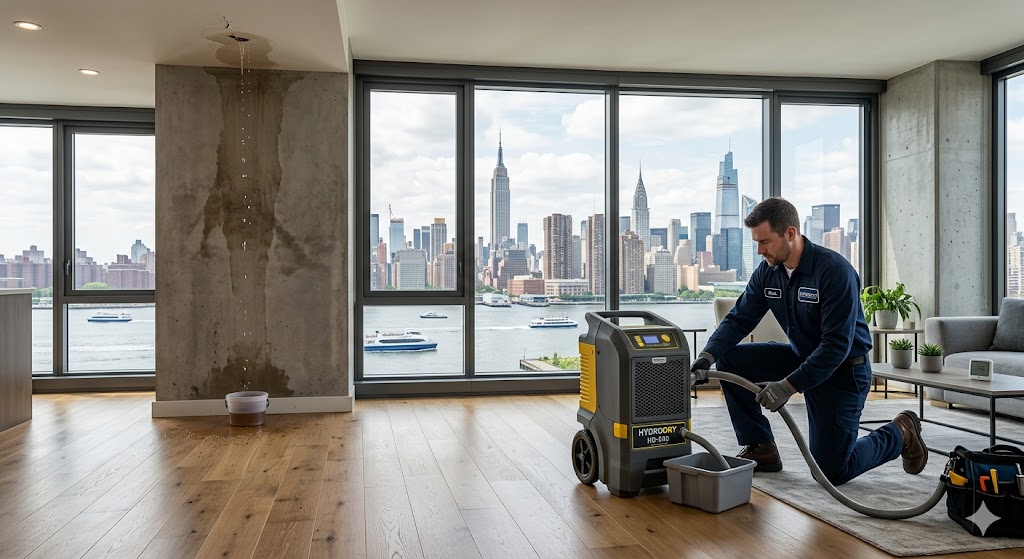
I have spent years responding to emergency restoration calls all over the borough, but there is a very specific type of phone call that instantly raises my heart rate. It usually goes something like this: "I am standing in my living room on the eighth floor of my building in Williamsburg, and there is water pouring out of my recessed lighting fixtures."
When you live in or manage a luxury high-rise tower, a plumbing failure is never a simple, isolated incident. Because of how these buildings are designed, gravity turns a minor pipe burst or an overflowing washing machine on the tenth floor into a multi-floor cascading emergency. By the time the water is shut off, residents from floors nine down to six are facing ruined hardwood, soaked drywall, and absolute panic.
Today, I want to pull back the curtain on these top-down disasters. We will look at why luxury tower plumbing fails, how the physical damage moves through shared walls, and how to navigate the complex web of responsibility that follows.
Why Luxury Towers Suffer Massive Water Failures?
Many people assume that moving into a brand-new, multi-million dollar luxury development means they are safe from plumbing headaches. Unfortunately, the opposite is often true. High-rise buildings operate under immense hydrostatic pressure. Water has to be pumped hundreds of feet into the air to service the upper floors, putting constant stress on every joint, valve, and supply line.
Additionally, many modern buildings feature high-end appliances like in-unit laundry hookups, built-in espresso machines, and multi-jet luxury showers. Every single one of these luxury features represents a potential point of failure. If an internal braided hose snaps on the twelfth floor while a resident is at work, hundreds of gallons of pressurized water will flood the subfloor within minutes.
Because concrete slabs in modern buildings are rarely completely watertight, the pooling liquid immediately finds the path of least resistance. It travels down electrical conduits, around plumbing stacks, and through the seams of the building envelope, creating a massive high-rise water damage NYC nightmare that ruins multiple properties simultaneously.
The Unique Complexity of a Multi-Unit Cleanup
When water moves vertically through a building, the restoration process is vastly different from a single-family home. You cannot simply put a few fans in one room and wait for things to dry out. The liquid is trapped inside the shared fire-rated walls, the interstitial insulation, and the acoustic ceilings that separate neighbors.
To prevent structural rot and toxic mold growth, a highly coordinated multi-unit flood restoration project in Brooklyn must be launched immediately. This requires opening up the drywall across multiple apartments at the exact same time to create cross-ventilation.
Our team at Flooded Brooklyn has to work closely with building management to orchestrate this process. We use specialized thermal imaging cameras to track the water hidden behind the high-end wallpaper and custom cabinetry of unaffected-looking rooms. If you leave even a small pocket of moisture trapped between the concrete slab and a neighbor's ceiling, mold will begin to develop within forty-eight hours, spreading spores throughout the shared HVAC shafts.
Navigating the Nightmare of Cross-Unit Liability
Once the immediate emergency is contained and the drying equipment is running, the secondary wave of panic sets in for the residents. Everyone wants to know the exact same thing: Who is going to pay for this mess?
Determining cross-unit water leak liability in a New York City high-rise is notoriously complicated. It involves untangling the building's proprietary bylaws, individual co-op or condo insurance policies, and renters' coverage.
Generally speaking, if a leak originates from a pipe hidden inside a shared wall or a main building riser, the building's master insurance policy is responsible for repairing the structural elements, like the drywall and subfloors. However, the building's insurance will not pay to replace your custom Italian hardwood floors, your designer furniture, or your high-end electronics. For those items, you must rely on your personal insurance policy, which will then attempt to subrogate, or collect damages, from the party responsible for the leak if negligence can be proven.
FAQ
What should I do first if water is leaking from the apartment above me?
The very first step is to protect your immediate safety by turning off any electrical breakers connected to rooms where water is dripping through the ceiling. Next, immediately contact your building's super, concierge, or property management office so they can access the unit above and shut off the main water line. Finally, take detailed photos and videos of the active leak and your damaged belongings before moving them out of harm's way.
How long does it take to dry out a multi-story water leak?
A typical high-rise drying project takes anywhere from three to five days of continuous equipment operation. Because water penetrates dense concrete slabs and fire-rated drywall assemblies, we must use commercial-grade desiccant dehumidifiers and high-velocity air movers to extract the deeply trapped moisture. We monitor the progress daily with moisture meters to ensure the building is completely dry before any reconstruction begins.
Who is responsible for paying my deductible after a cross-unit flood?
Initially, you will be responsible for paying your own insurance policy's deductible to get your personal property restoration started. However, if the official restoration report proves that the leak was caused by a specific neighbor's negligence, such as an improperly installed appliance, your insurance company will likely pursue that neighbor's insurance to recover the costs and eventually refund your deductible.
Can I stay in my apartment during a major high-rise restoration?
It depends on the severity of the water damage and the location of the drying equipment. Commercial dehumidifiers and air movers are loud and generate significant heat. If the water has compromised your electrical system, affected your kitchen or main bathroom, or requires extensive drywall removal across your living space, it is usually highly recommended to stay in temporary housing until the environmental stabilization phase is complete.
Conclusion: Restoring Order to Your High-Rise Community
Standing in a luxury apartment while water ruins your hard-earned property is an incredibly violating experience. The physical damage is frustrating enough, but the tension it creates between neighbors and management can make the situation feel entirely unmanageable.
The secret to surviving a top-down disaster is speed and professional coordination. By bringing in a team that understands the structural engineering and political realities of Brooklyn high-rise buildings, you can stop the water from spreading, document the damage accurately for insurance, and protect the long-term health of your home.
At Flooded Brooklyn, we specialize in managing these complex, multi-family plumbing emergencies from start to finish. We handle the technical drying process and coordinate seamlessly with your building's management team to restore safety and peace of mind as quickly as possible. If your building is facing a vertical water emergency, visit our website at Flooded Brooklyn or call us immediately to get our expert team on-site.
